St Mary’s, Chaddesden
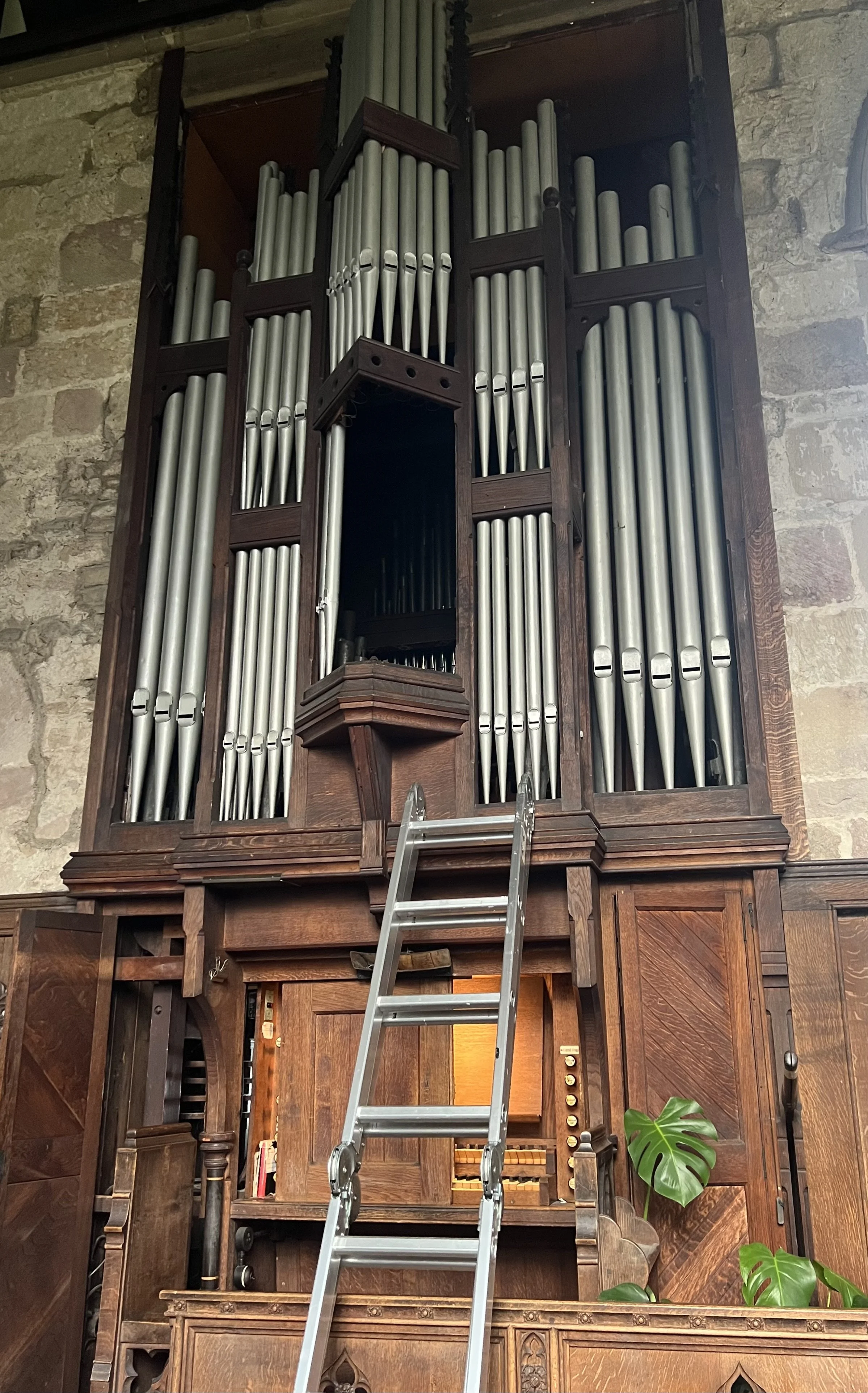
The organ at St Mary’s is a fine example of late‑19th‑century craft. Built by Isaac Abbott of Leeds, it was first heard in public at its opening recital on 28 September 1876.
For well over a century it accompanied worship, weddings, and community celebrations, its Victorian pipework filling the Grade I listed church with a lovely sound.
Its traditional layout, rich principal chorus, and singing flutes make it particularly well suited to hymn‑singing and the Anglican repertoire for which it was designed. Housed in a purpose‑built chamber on the north side of the chancel, the organ speaks clearly into the nave, supporting both congregational singing and choir-led music.
A fault in the over 80 years old electrical blower condemned the organ to a two year-long sleep: the Abbott organ at St Mary’s could no longer be used, and the church had to rely on electronic substitutes and recorded music. What had once been the musical heart of St Mary’s became a silent backdrop to services, its pipes visible but voiceless.
St Mary’s approached Pipe Up for help even before the Sleeping Beauty Grant Scheme was announced, and fortunately, it was one of the first to benefit from the scheme to help pipe organs that have fallen silent because of significant but easy-to -fix failures.
Working alongside St Mary’s, Pipe Up helped to evaluate quotations from different organ builders, ensuring the chosen approach could be effective and financially sensible. Once a plan was agreed, Pipe Up released grant funding to unlock the project and move it from aspiration to action.
With support in place, the parish engaged local organ building firm M. C. Thompson to undertake blower replacement and essential tasks such as adjusting the mechanic actions, fix cyphers and tuning the pipework. All of this was achieved in only two days’ work, returning the pipe organ’s joyful sound to the congregation just in time from Christmas carols.
Pipe Up is proud to have played a part in this story, helping St Mary’s to reawaken its valued Victorian organ, which can now continue to be enjoyed by the local community as well as visiting organists.